Introduction
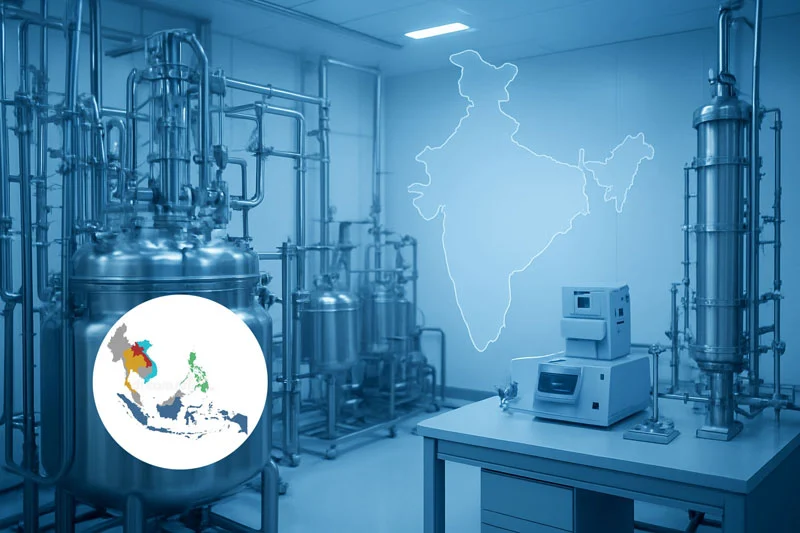
Southeast Asia is one of the regions in the world where the healthcare market is growing at the fastest rate. Countries in the region are depending on India as a main sourcing partner due to the increase in demand for chronic therapies, essential medicines, sterile injectables, and the supplies for hospitals, APIs, and nutraceuticals.
India has become a destination for pharmaceutical companies worldwide as it provides a regulated-market-quality product, cost-saving, and a strong know-how in ASEAN regulatory requirements. The purpose of this page is to serve as the backbone which connects all the South East Asian country-level sourcing guides.
Why Southeast Asian Buyers Choose India
1. Regulated-Market Quality
India supplies the world’s largest number of generic medicines approved by:
- USFDA
- EU-GMP
- MHRA
- TGA Australia
- WHO Prequalification
Ideal for markets with strong regulatory oversight like Singapore, Thailand, and Indonesia.
2. Competitive Pricing
India's lower manufacturing costs of 30-50% give excellent market access while maintaining high quality — just what the markets of Myanmar, Philippines, Cambodia, and Vietnam look for.
3. Strong API Manufacturing Ecosystem
India is one of the largest API producers for the ASEAN region.
High demand APIs include:
- Metformin
- Omeprazole
- Cefixime
- Diclofenac
- Atorvastatin
- Paracetamol
4. Familiarity With ASEAN Regulatory Frameworks
Indian manufacturers understand:
- BPOM Indonesia
- FDA Philippines
- Thai FDA
- HSA Singapore
- FDA Myanmar
Many have dossiers and stability studies ready.
5. Strong CDMO Capabilities
India supports:
- Solid orals
- Injectables
- Hormonal products
- Nutraceuticals
- Herbal medicines
- Custom formulations
- Private-label manufacturing
What Southeast Asia Imports From India
- APIs for local manufacturing
- Tablets/capsules/syrups
- Sterile injectables
- Oncology products
- Nutraceuticals & wellness
- Disposables & hospital consumables
- Herbal & Ayurvedic products
Regional Regulatory Overview
ASEAN regulators generally require:
- CTD/eCTD dossier
- GMP certificate
- Stability zone IV data
- COPP
- Labeling in English, Thai, Bahasa Indonesia, or local language
- Samples for testing
- MAH/local agent
Indian companies are experienced in all these formats.
Logistics From India to Southeast Asia
Air freight: 2–6 days
Sea freight: 7–22 days
Common routes:
- Mumbai → Singapore
- Chennai → Bangkok
- Kolkata → Yangon
- JNPT → Manila / Jakarta
Cold-chain support available.
Standard Sourcing Workflow for Southeast Asian Buyers
-
Prepare product list
-
Select WHO-GMP/EU-GMP Indian suppliers
-
Collect dossiers & COA
-
Conduct audits (optional)
-
Submit for regulatory approval
-
Finalize pricing, MOQ, and contracts
-
Begin manufacturing & supply
-
Manage pharmacovigilance & variations
Sourcing Challenges & Solutions
Challenge: Registration delays
Solution: Pick suppliers with dossiers+ ASEAN experience
Challenge: Language labeling issues
Solution: Early sharing of translations; request for design proofs
Challenge: MOQ constraints
Solution: Orders to be consolidated; custom batch sizes to be negotiated
Challenge: Cold-chain needs
Solution: Use GDP-certified Indian exporters
Country-Specific Guides
- Indonesia: How to Source APIs & Medicines From India
- Philippines: Sourcing Pharma Products From India
- Singapore: High-Quality India → Singapore Pharma Supply
- Myanmar: Importing Medicines From India
- Thailand: CDMO & Pharmaceutical Sourcing From India
Conclusion
Southeast Asian markets are heavily dependent on the importation of pharmaceuticals that are efficient, compliant, and cost-effective — and India is still the most trustworthy partner in the region. Indian pharma provides the whole range from APIs to injectables and from nutraceuticals to private-label manufacturing along with the strong regulatory support that has been proved to be reliable and of global standard quality.
Frequently Asked Questions(FAQs)
1. Why is India a preferred pharma sourcing partner for Southeast Asia?
India offers global-standard quality, strong API manufacturing, competitive pricing, and experience supporting ASEAN regulatory requirements.
2. Which Southeast Asian countries import the most pharmaceuticals from India?
Indonesia, Philippines, Thailand, Myanmar, Singapore, Malaysia, and Vietnam are major import markets.
3. Do Indian manufacturers comply with HSA, BPOM, Thai FDA, and FDA Philippines regulations?
Yes. Many Indian exporters are experienced with ASEAN dossiers, eCTD, stability zone IVB data, and MAH/AR support.
4. What pharmaceutical categories are in highest demand across Southeast Asia?
Chronic care therapies, antibiotics, gastrointestinal medicines, injectables, APIs, OTC products, and nutraceuticals.
5. How long does shipping take from India to Southeast Asia?
Air freight takes 2–6 days; sea freight takes 7–22 days depending on the route.
6. What documents do ASEAN regulators require for pharma registrations?
CTD/eCTD dossier, GMP, COA, COPP, stability data, DMF (for APIs), and approved labeling.
7. Can Indian companies handle private-label or OEM manufacturing for ASEAN markets?
Yes. Many Indian CDMOs support private-label OTC, nutraceutical, herbal, and pharmaceutical products.
8. Are Indian APIs accepted by local manufacturers in ASEAN countries?
Yes. India is the largest API supplier to Southeast Asian manufacturers.