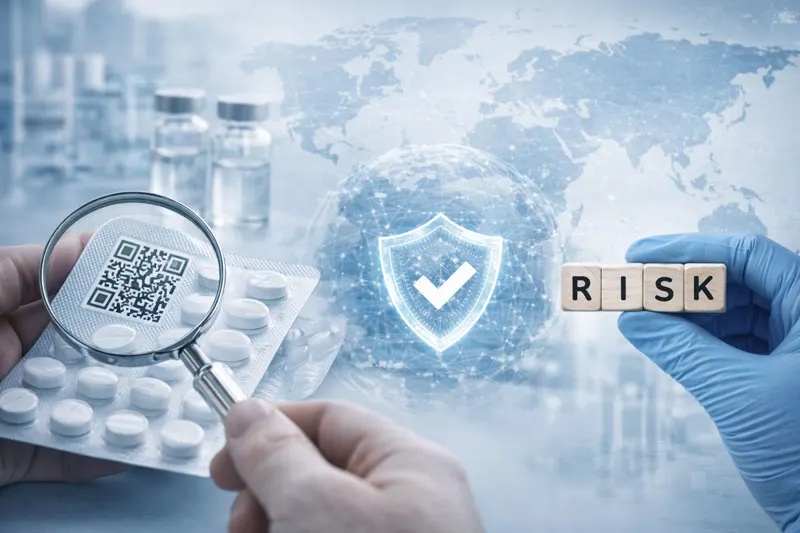
The complexities of global pharmaceutical sourcing have never been greater. By 2026, buyers are likely to face an increasing number of risks associated with counterfeit medicines, shortages of supply as well as unverified sources.
Hospitals, distributors and teams responsible for procuring supplies will have to focus with regards to authenticity, traceability and compliance rather than just price point.
This guide outlines:
- The reasons for the increase in risk associated with global sourcing
- How buyers can verify authenticity of medicines.
- Common indicators that indicate fraud in global pharma trade
- Risk control mechanisms used by some of the leading buyers of pharma.
- How regulated models such as Parallel Import Trading reduce the risk of exposure to such fraud
Why Risk in Global Pharma Sourcing Is Increasing
Several factors have contributed to the increased risk associated with global sourcing in recent years.
1. Global Shortages of Medicines
With medicines becoming scarce, buyers need to find alternatives quickly. This presents the risk of sourcing from unverified suppliers.
2. High-Value Therapies Attract Malpractice
Medications for oncology and injectables are becoming very expensive; therefore, they are often used for fraudulent purposes.
3. Cross-Border Complexity
Countries have various regulations and their interpretation can vary, which creates an additional risk for compliance if the buyer does not fully understand the local regulations.
4. Growth of Grey Markets
Many companies do not take the necessary legal steps and do not have the required licensing, auditing, or traceability.
What “Authentic Medicines” Really Mean
When determining the authenticity of a medicine, it is not enough to simply verify that it has the proper brand name.
An authentic medicine must:
- 1. Have been manufactured by a legitimate company.
- 2. Have an established and verified batch number.
- 3. Be supported by sufficient documentation.
- 4. Have been stored and transported appropriately; and
- 5. Be approved for distribution within the market in question.
If any of the above list items cannot be confirmed to your satisfaction, do not consider purchasing that item.
Major Risks in Global Pharma Sourcing
1. Counterfeit or Fake Drugs
These may look authentic but contain:
- Wrong ingredients
- Incorrect strength
- No active ingredient at all
All of these pose serious hazards to patient safety. (Also Read: How to Verify Pharma Suppliers and Avoid Counterfeit Products?)
2. Diversion and/or Sale Through Non-Approved Channels
Genuine products can be tracked back through their manufacturer/distributor; however, if they are diverted away from the approved distribution channel, there is no traceability, therefore no accountability.
3. Cold-Chain Failures
There are many medicines that require temperature controlled storage/transportation.
4. Gaps in Required Documentation
Missing or incorrect documents create:
- Customs delays
- Regulatory penalties
- Product rejection
(Read: Guide to Global Pharma Regulatory Requirements (FDA, EMA, CDSCO)
5. Trademark & Legal Issues
Illegal packaging and/or labelling violations will result in legal action being taken against the manufacturer or supplier (typically in cross-border trade).
How Buyers Can Verify Medicine Authenticity
Leading procurement teams can follow strict checks.
1. Supplier Verification
Buyers confirm that suppliers are:
- Licensed
- GDP-compliant
- Audited regularly
Unverified sellers are avoided.
2. Batch & Lot Traceability
Each shipment must include:
- Batch number
- Manufacturing date
- Expiry date
- Certificate of Analysis (COA)
This allows full tracking.
3. Serialisation & Track-and-Trace
Many markets require 2D barcodes and tamper seals.
These help detect fake or reused packs.
4. Cold-Chain Monitoring
Temperature logs prove that storage rules were followed.
This is critical for biologics and injectables.
5. Regulatory Cross-Checks
Buyers confirm:
- Product approval status
- Import licence validity
- Repackaging permissions
Use of Regulated Sourcing Models to Minimize Risk
There are various methods of sourcing which are subject to a different level of risk.
1. Direct to Manufacturer or Authorised Distributor
The lowest risk method, however, also typically carries a higher cost.
2. Named-Patient Import (Individual Case Basis)
Used for medicines that have not been approved by the regulatory bodies (ie. FDA).
3. Parallel Import Trading (EU/UK)
One of the safest methods of sourcing alternative medicines.Parallel Import Trading allows buyers to source the same branded medicine from another approved market under strict licensing, repackaging, and safety rules.
Key advantages:
- Same originator product
- Regulator-approved licences
- Full traceability
- GDP-controlled logistics
- Lower risk than informal grey markets
This makes it a preferred option for hospitals and distributors seeking cost savings without compromising safety.
Red Flags Buyers Should Never Ignore
Avoid suppliers if you notice:
- Prices far below market norms
- Missing COA or batch data
- No GDP certificate
- Refusal to share audit reports
- Unclear country of origin
- Pressure to rush payment
- No written contracts
These signs often indicate high risk.
Risk Management Checklist for Pharma Buyers (2026)
Before placing any global order, confirm:
- Supplier licence and audit status
- Product approval in source and destination markets
- Batch, COA, and expiry verification
- Temperature control plan
- Import and customs compliance
- Repackaging and labelling rules
- Pharmacovigilance responsibility
- Legal and trademark review
If one item fails — pause the transaction.
How Digital B2B Platforms Improve Safety
Modern B2B pharma platforms reduce risk by offering:
- Pre-verified supplier networks
- Document validation before shipment
- Integrated cold-chain tracking
- Batch-level traceability
- Regulatory support
- Transparent pricing models
- Secure communication records
This shifts sourcing from relationship-based trust to system-based trust.
Why Risk Management Matters More in 2026
Regulators are increasing scrutiny.
Hospitals are under pressure to protect patients.
Distributors face higher penalties for non-compliance.
In 2026, safe sourcing is a competitive advantage.
Buyers who invest in authenticity controls win trust and long-term stability.
Conclusion
Global pharma sourcing in 2026 demands more than negotiation skills.
It requires discipline, verification, and risk awareness.
By choosing regulated sourcing routes, validating every step, and avoiding shortcuts, buyers can protect patients, budgets, and reputations.
Looking for Safe & Verified Pharma Sourcing?
Access authenticated suppliers, regulated sourcing routes, and full traceability support — including Parallel Import Trading and compliant global procurement.
Contact Our Sourcing Experts
Frequently Asked Questions(FAQs)
Is low price always a risk sign?
Not always, but unexplained low pricing is a major warning.
Are parallel import medicines safe?
Yes, when sourced through licensed and regulated routes.
Can hospitals verify authenticity themselves?
Yes, but it requires strong systems and experience.
Do biologics need extra checks?
Yes. Temperature control and traceability are critical.